
By BoDuan ·
EVA Edge Skiving: Check the Bevel After the Foam Recovers
Check an EVA bevel after the part is free of feed pressure and has had the same recovery time as the comparison sample. Measure at the edge, near the start of the bevel and on the uncut body. Then check how the recovered profile fits the adjacent footwear component.
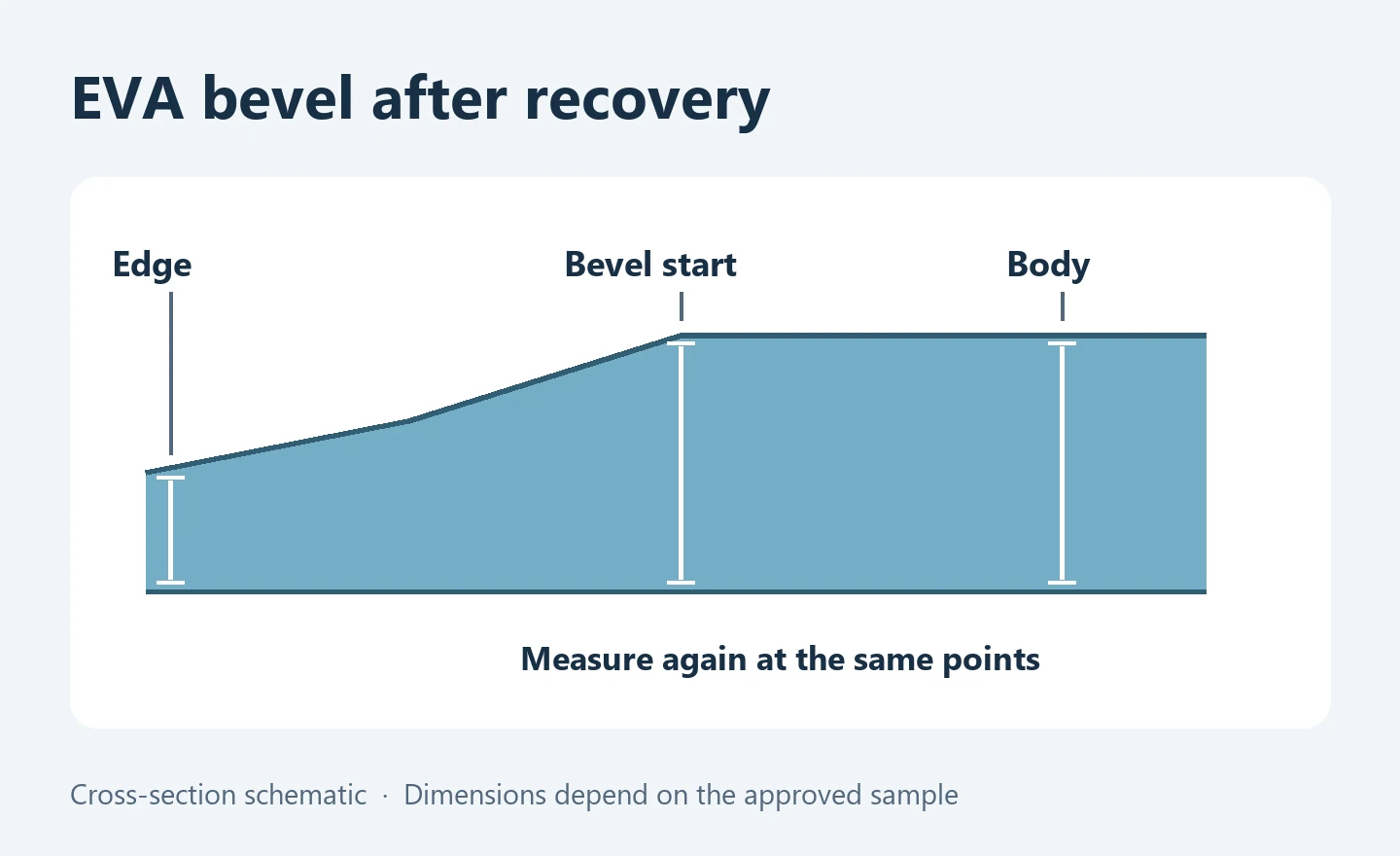
Compare the same marked locations after release. The drawing shows where to measure the bevel and body. It gives no target dimensions.
What changes when the EVA is released?
Foam can deform under feed pressure and while it is being measured. Mark the points on the uncut control and trial part before cutting. Set both flat and unsupported by clamps or tension. Compare readings with the same measuring method and contact pressure after the same agreed recovery time.
Record the material batch and the elapsed time next to the measurements. If the first and later readings differ, use the agreed inspection time for production comparisons. An EVA supplier’s foam datasheet illustrates why recovery conditions are part of a measurement record.
View the BD-MJ102 skiver and its material applications before sending your foam for a trial.
What should pass before you release the bevel?
Compare bevel width and remaining thickness against the drawing at a straight location and at the tightest turn. Check that the bevel transition is continuous and the edge does not show tearing. Dry-fit the part to the next component. If the job depends on bonding or wrapping, run one sample through that step and compare it with the approved part before releasing the setting.
What to send for a skiving trial
Send foam from the actual production batch and its material specification, an uncut reference and a target edge or assembled shoe component. Mark bevel width and thickness checkpoints, and include the recovery time and measuring method used for acceptance.
Use the width and thickness measuring guide and the sample preparation checklist.
Discuss a BD-MJ102 footwear material skiving trial →