
By BoDuan ·
Heel Counter Skiving: How to Feather the Stiffener Edge
If the edge of a heel counter shows through the shoe upper, mark the exact part of the stiffener that makes the ridge. Feather that margin toward the cut edge and preserve the thickness through the body that supports the heel. Approve the taper on a lasted upper with the production lining.
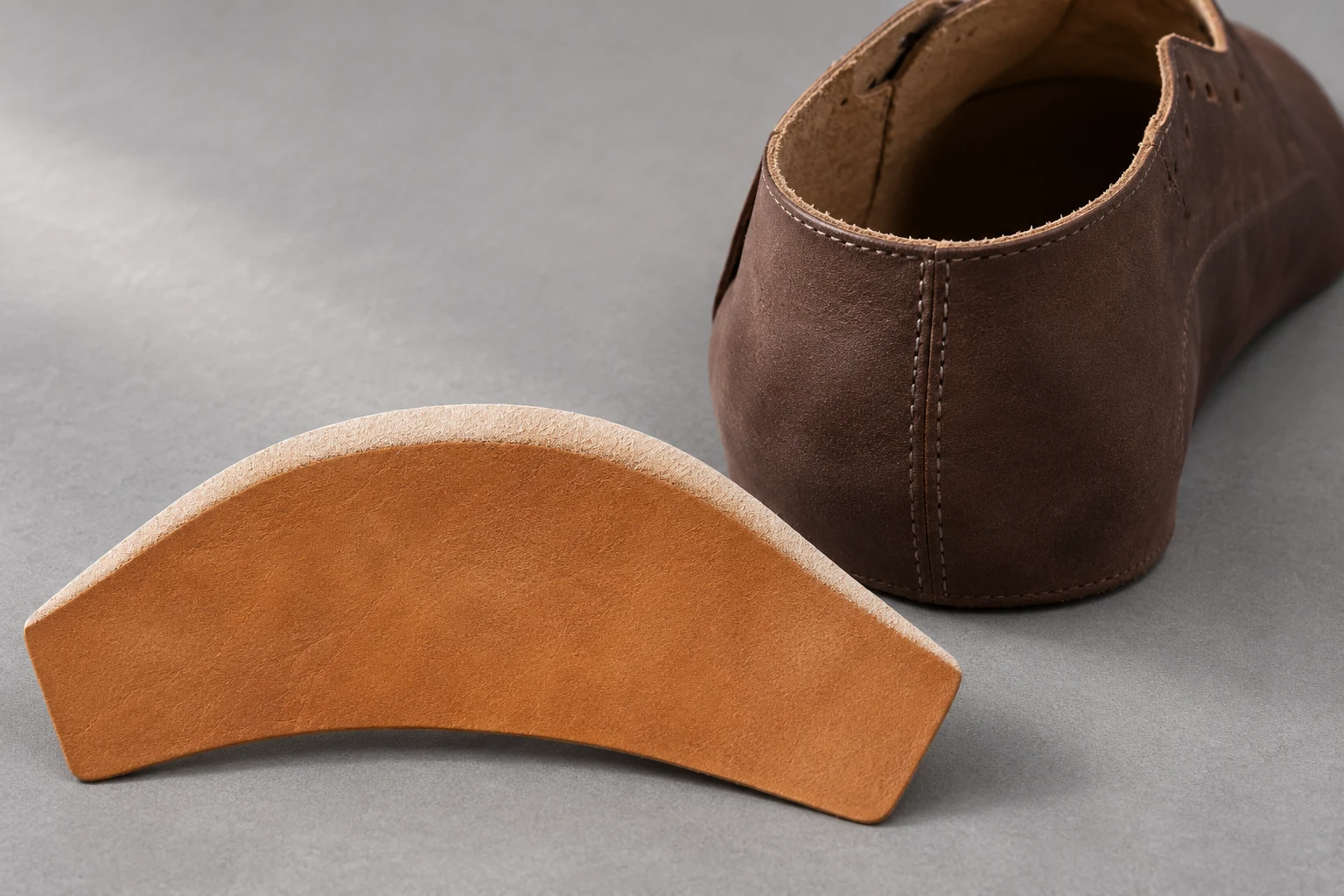
A loose heel counter blank beside the rear of an upper. The lighter band shows the top margin to inspect. Use your own pattern and counter material to locate the actual taper.
Which shoe counter stiffener edges should you skive?
Slip the counter into the upper and mark where its top edge and wing tips meet the lining. Hold the upper against the last and use light from the side to locate any ridge. If the line follows the upper edge of the counter, trial a shallow taper on that edge. A ridge at a lining seam calls for checking the lining stack first.
Keep the lasting allowance separate on the drawing. Excess bulk where the allowance turns under the heel seat is a different problem from a visible line higher on the upper. For bonded or coated stiffeners, confirm which face can be worked and whether the grade can be cut with the intended tooling before trying a skiver.
How do you feather a heel counter edge evenly?
On a flat blank, label three measuring stations at the rear center and both wings. At each station record the width of the taper and the residual thickness at the outer edge. A thickness reading just inside the taper checks whether the skive has started to thin the body of the counter.
Run two blanks of the same material and cut. Keep one as the control. On the other, adjust one dimension at a time. If only one wing still prints through, compare the left and right cut before widening the taper across the whole counter.
What passes a heel counter skiving sample trial?
Assemble the control and trial with the same lining, adhesive and forming sequence. After the counter has set, inspect the outer heel at an angle, feel for a ridge through the lining and compare rear support with the approved upper. Check the heel seat separately when the bottom margin was part of the trial.
Record the passing dimensions on the blank. If the top line is smoother but the rear no longer holds its required shape, increase the retained material or narrow the skive at that station and repeat the trial.
What to send for a skiving trial
Send a pair of unformed stiffener blanks, the material specification, an unskived control and a photo of the ridge on a lasted upper. Include the outer upper and lining, mark the top margin, wing tips and lasting allowance, and identify the position and thickness that must be retained.
Use the width and thickness measuring guide and the sample preparation checklist.
See the BD-103 machine and its applications →
Discuss a BD-103 leather edge skiving trial →