
By BoDuan ·
Where Do Presser Foot Marks on Skived Leather Come From?
A shiny line or dent on the grain face after skiving can start before, during or after the cut. Mark the original orientation so you can trace the line to the face and position that touched the equipment.
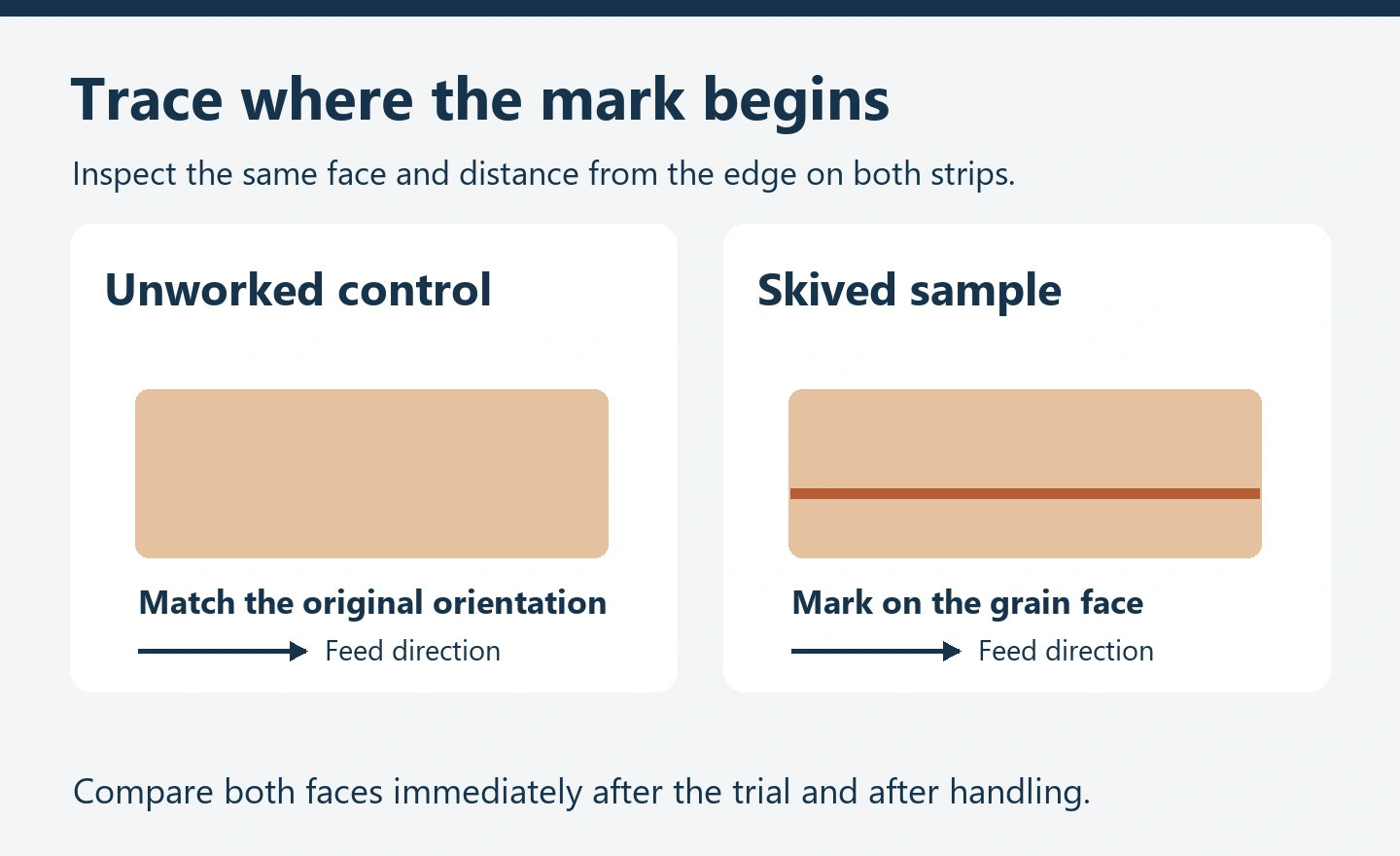
Compare the same positions on an unworked strip and a skived strip. Mark the face, feed direction and distance of the line from the original edge.
Photograph both faces before and after a trial
Put an unworked offcut from the same leather beside the skived piece. Photograph both under side light before changing the setup. Record whether the mark is a continuous line, a repeating imprint or an isolated dent, and whether it appears on the grain face, the flesh face or both.
Check when the line first appears
Inspect the sample as soon as it leaves the machine, then again after laying it down. A new line on the face that touched the foot gives the technician a different inspection point from a repeating mark on the roller side. On soft leather, compare the marks again after the pieces have relaxed. Have qualified staff inspect the relevant contact surfaces with power isolated according to the machine instructions.
For a production trial, see the BD-102 bell knife skiving machine. Use the same offcuts to record contact conditions when leather stops feeding.
The Fortuna ES 50 operating manual lists cutting and contact components to check when skiving quality changes. Use the instructions for the machine being serviced.
What to send for a skiving trial
Send the affected piece, a matched unworked strip and side-lit photos of both faces. Include the finish, feed direction and the distance of the mark from the edge.
Use the width and thickness measuring guide and the sample preparation checklist.
Discuss a BD-102 leather edge skiving trial →