
By BoDuan ·
Shoe Upper Seam Skiving: Where to Thin a Derby Overlap
Lay the vamp and quarter in their actual sewing order. Start by tapering the hidden edge of the underlay where it creates a ridge. Keep enough material through the stitch line on both pieces, and keep the visible top edge intact unless the pattern calls for a fold or a separate skive.
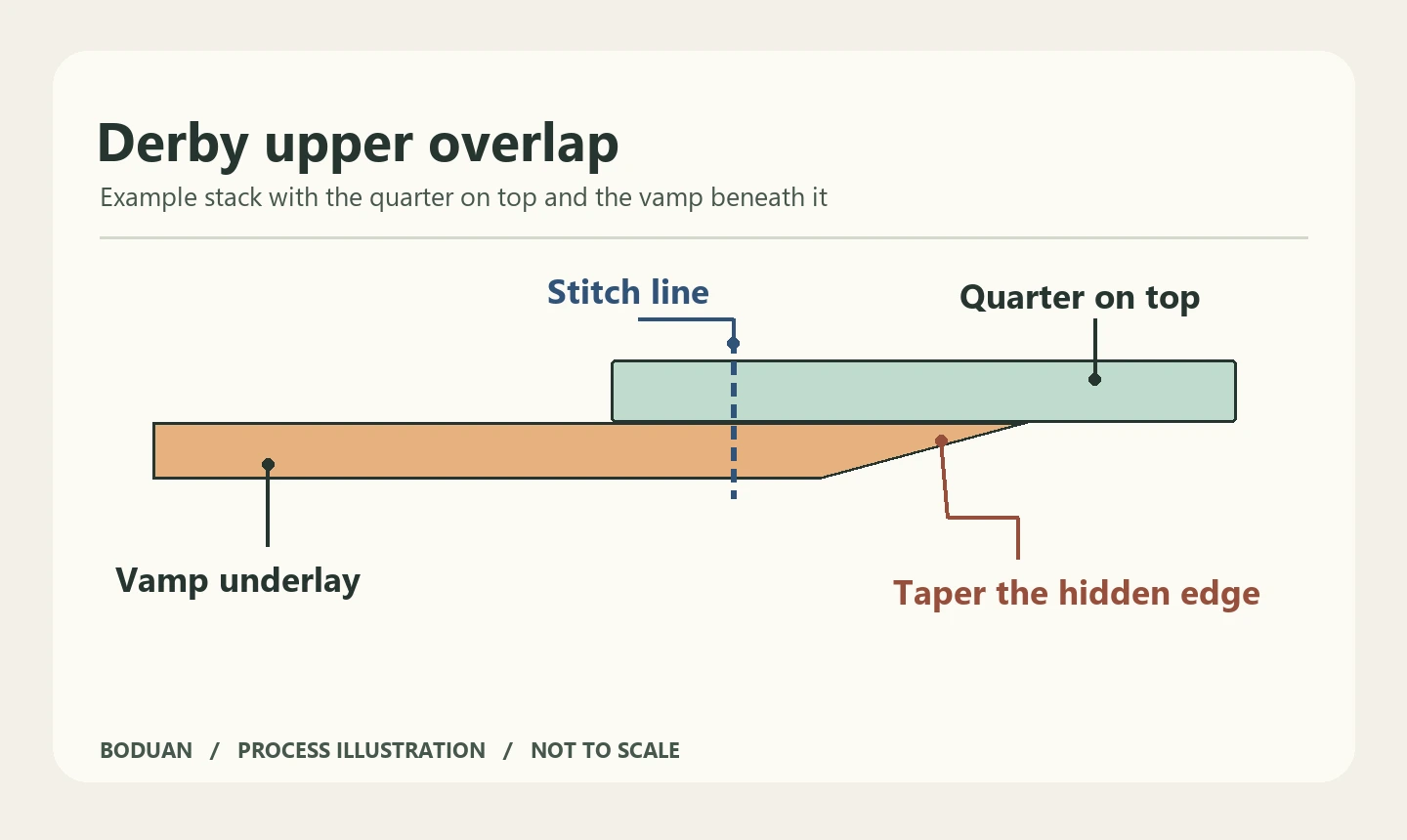
This example shows the quarter on top and the vamp beneath it. Check the stacking order on both sides of your own pattern. The diagram gives positions to inspect and is not a cutting pattern.
Where should you skive the vamp and quarter overlap?
Dry-stack the actual pieces and mark three lines on a photo: the visible edge of the top piece, the planned stitch line and the hidden edge of the underlay. Bend the stack gently over the shape the upper will take. If a ridge follows the hidden cut edge, test a shallow taper that ends before it undermines the stitch support. Keep the rest of the vamp at body thickness.
If the top piece has a folded edge, check that turned margin separately. Try reducing the fold bulk from the flesh side while keeping the grain face and the material around the needle line. A raw visible edge may need a different finish, even when the two uppers look similar from outside.
Comparing equipment for this seam? See the BD-102 skiver and leather edge demonstration before planning your trial.
How do you reduce bulk without weakening the upper seam?
Use a control seam with your current skive and a second cut from the same leather with one changed setting. Record the skive width from the cut edge and the remaining thickness at the hidden tip and beside the stitch line. The hidden tip and the needle path have different jobs, so record each position separately.
- Wide flat run. Look for a ridge under low-angle light after closing.
- Curved transition. Check whether the taper wanders across the marked stitch line as the parts turn.
- Seam end. Compare the height where the overlap meets the next panel or a lining join.
What do you check before closing a full upper?
Close one left and one right trial following the production glue and sewing sequence. Check appearance and seam support after bending. Compare the holes and the edge against an approved sample and your production strength requirement. If a seam opens, the thin tip rolls, or the stitching prints through the grain, restore support at that position and repeat the sample before changing the whole batch.
What to send for a skiving trial
Send the matched vamp and quarter cutouts, including the tightest part of the joint, and the lining or reinforcement used there. Mark the face side, overlap boundary and stitch line. Include a closed reference seam, starting thickness and the two trial measurements if available.
Use the width and thickness measuring guide and the sample preparation checklist.
Discuss a BD-102 leather edge skiving trial →