
By BoDuan ·
How to Skive a Leather Bag Zipper Opening
Dry-fit the actual zip, outer leather and lining first. Mark the fold, stitch line and slider path, then try thinning the leather margin that adds bulk. Leave enough support at the stitch line and clearance beside the teeth. Set the target from a sewn sample with the production tape and lining.
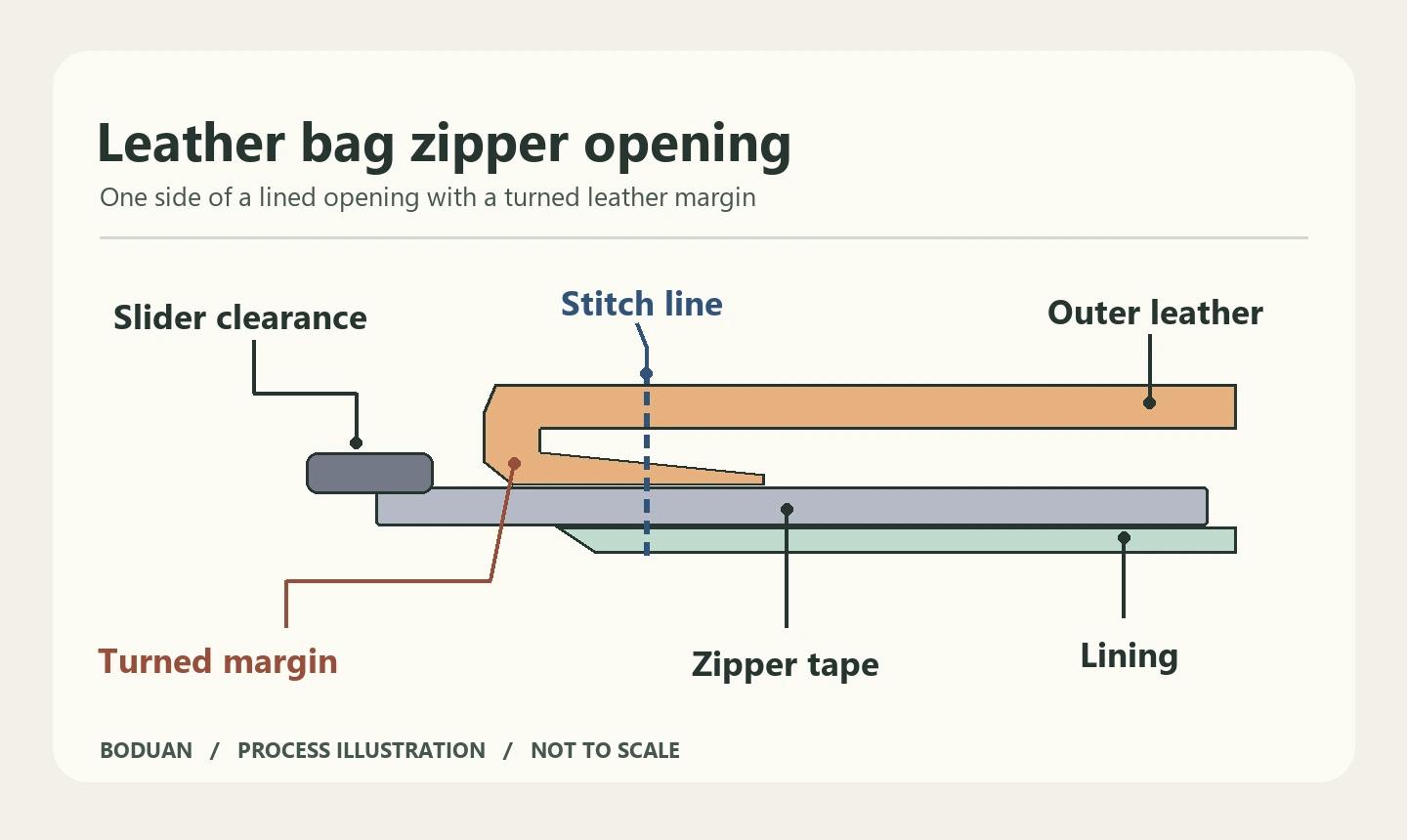
One side of a folded leather zipper mouth, with zipper tape above the lining. The straight cross-section and the end-tab stack need separate checks.
Where should you skive leather around a bag zipper?
Lay the zipper closed under the two leather panels, then move the slider from stop to stop. Mark where the slider body travels and where the seam will pass through leather and tape. If a turned leather margin builds a ridge, mark the flesh side of that margin for a taper. Record the width of that strip and the leather thickness near the needle path before sewing.
On a window opening with a raw edge, check the facing or reinforcement underneath first. Changing the top leather can alter the visible opening. If the slider touches because the panels overhang the teeth, check tape position and the opening width on the pattern.
Choosing a machine for the turned leather margin? See the BD-102 edge skiver and demonstration before setting up your zipper sample.
How do you reduce bulk at the zipper seam?
Make a short run with the standard stack and a second run with one leather layer changed. Compare both with the same tape and stitch line. Keep the zipper tape and teeth intact. At the end tab, record the stack with the tab and reinforcement in place because a flat middle section can pass while the end still binds.
- Straight section. Compare how flat the leather lies after stitching.
- Slider travel. Open and close with the lining tucked inside. Check the pull from both directions.
- End stop. Look for a high spot where the tab, tape and lining stack together.
How do you check a lined leather zipper opening?
Stitch the trial with the production lining and adhesive. Turn it into its assembled shape before judging the opening. If the lining catches with the outer leather flat, first check lining setback and its fold. Compare the sewn sample with your approved opening width and pull action, then confirm that the stitch holes and end tabs have the required support before releasing a machine setting.
What to send for a skiving trial
Send an actual zipper and slider, both outer leather pieces, the lining, and any end tabs or reinforcement. Mark the stitch path, finished opening and the point where the slider slows down. Include a sewn control and the nominal width and thickness of each layer.
Use the width and thickness measuring guide and the sample preparation checklist.
Discuss a BD-102 leather edge skiving trial →