
Sample trial · By BoDuan ·
How to Skive Leather for a Flat Wallet Fold
To flatten a bulky wallet corner, open the fold and check where the fold line, the edge of the skived strip and the lining meet. If the fold crosses back into full-thickness leather, test a wider skive. If the bulge only appears where layers overlap, compare the thickness of that stack before thinning any more leather.
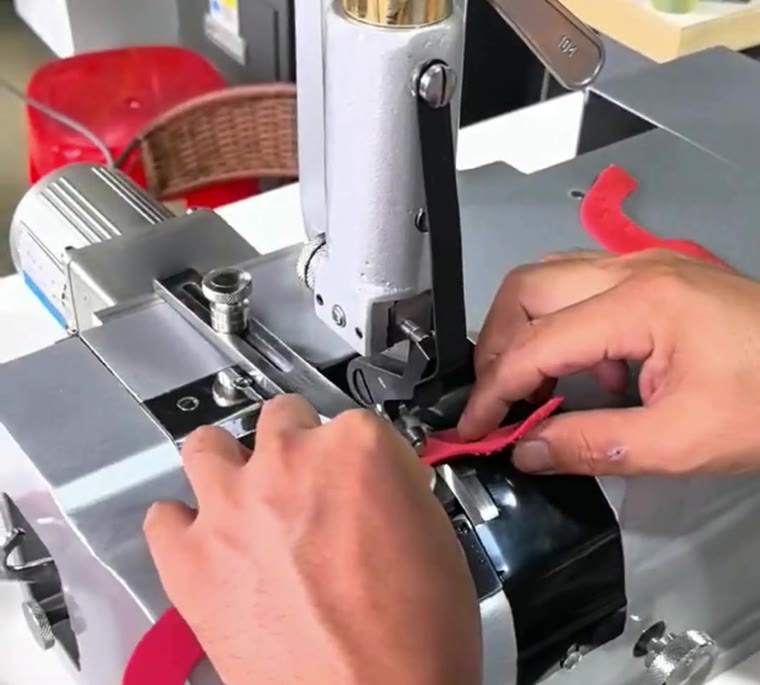
This BD-102 workshop photo shows the operator feeding a leather sample under the presser foot. For a wallet trial, bring the actual corner and check that same part after folding.
Watch the BD-102 demonstration →Mark three positions on the actual part
Take a top-view photo and mark a straight section that meets your finish standard, the point where the fold starts to rise, and the thickest spot at the corner. At each mark, note which layers turn into the fold and which stop short. Keep an untouched piece from the same material to check the starting thickness.
Should you skive wider or thinner?
Measure the width of the thinned strip inward from the cut edge. Measure the remaining thickness through the leather at each mark. Mark the fold line on the same photo. If the strip already extends past the fold, keep that width for the first comparison and check how the lining and the outer leather stack at the corner.
Keep the straight section as a reference and change one item per trial. A comparison at the two ends of the same skive can show whether the raised step starts where the skive ends or where the lining begins to overlap.
See how to record skive width and remaining thickness.
How thin should a wallet edge be?
Use the thickness of the actual layers and the needs of the seam or bonded fold to set the trial target. Give the operator the thickness you already accept at the finished seam if you have a reference sample. Record the starting and remaining thickness at the exact points you plan to compare.
Fold the sample using your normal process. If you bond or stitch it, inspect the same three spots again after that step. Compare the finished corner with an approved sample. Check for a raised step where the skive ends, buildup where layers overlap, and enough material remaining at the seam for your construction.
What should you send for a skiving trial?
Send the actual corner cutout and lining, an untouched piece of the same material, and photos showing the three marks before and after assembly. A straight offcut helps establish a baseline. The actual corner shows how the lining, skived strip and seam meet when folded. Use the leather edge skiving sample checklist before discussing the trial on the BD-102 bell-knife skiver.
Ask BoDuan about a BD-102 sample trial →