
By BoDuan ·
Skiving Thick Vegetable-Tanned Leather for a Long Taper
Define a long taper by its start line, the remaining edge thickness and the planned fold or overlap. Use a cross-section to check the transition back into full thickness. Along with a loose coupon, bring a sample of the assembled part so a visible shoulder can be checked under the actual construction.
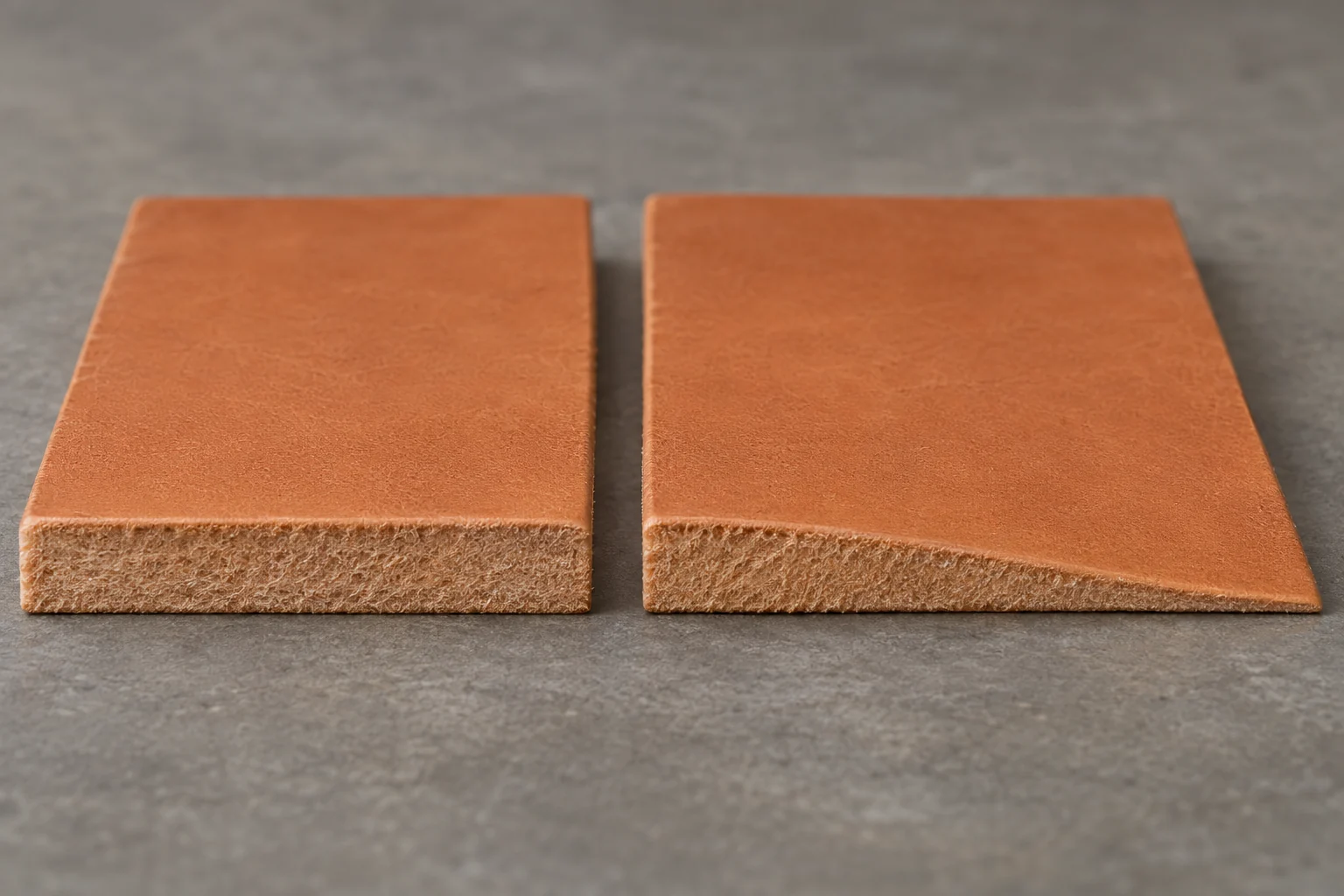
The two separate coupons illustrate an unskived baseline and a gradual change in thickness. They show a shape to specify for a trial.
Where does the taper need to start?
Lay out the actual belt end, bag overlap or folded tab. Mark the fold line, stitch line and taper start on the flesh side. Measure taper length across the profile from the cut edge toward the full-thickness body. Record the width rather than asking only for a thin edge.
Which thickness readings define the profile?
Specify the full body thickness, the target at the cut edge and a checkpoint inside the taper. If the stitch line crosses the taper, give its own minimum remaining thickness. On a sacrificial duplicate, inspect the cross-section for a flat step before the taper joins the full body.
How do you approve the long taper in a trial?
Compare a skived coupon with the original section, then dry-fit or assemble the production layers. Check whether a shoulder reads through the surface and whether the fold or overlap sits to the intended outline. Ask the trial operator to record the foot and feed configuration and the actual passes used for this leather.
For an example of a machine with a separate bevel foot option, see the Consew DCS-S4 notes.
What to send for a skiving trial
Send production leather with starting thickness, a sketch marking the taper start and end, thickness targets at named points, and an assembled example with your intended adhesive, backing or seam.
Use the width and thickness measuring guide and the sample preparation checklist.
See the BD-102 machine and its applications →
Discuss a BD-102 leather edge skiving trial →