
Machine selection · By BoDuan ·
Edge Skiving vs. Leather Splitting: Which Machine Do You Need?
Use a bell-knife skiver when the seam allowance, fold or overlap needs to be thinner and the body of the part should stay at its original thickness. Use a band-knife splitter when the whole panel needs a different thickness. Check the thickness you want at the edge and in the middle before asking for a trial.
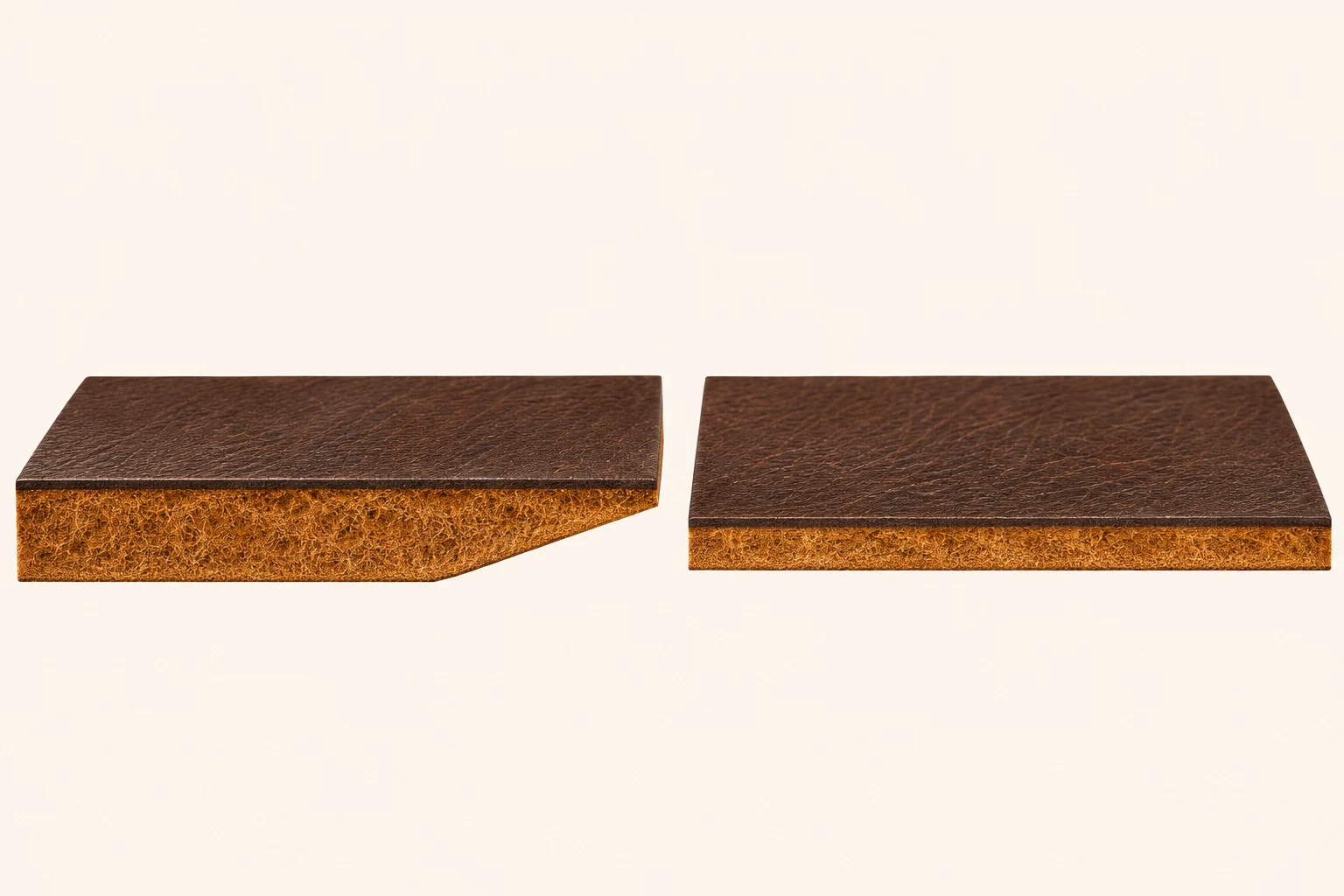
Left, only the edge is thinned. Right, the entire panel is thinner, including the middle.
AI-generated process illustration
Should you thin the leather edge or the whole panel?
Mark the edge, the seam or fold line and the centre of the piece on a photo. Write the target thickness at the edge and at the centre. If the centre should stay as it is, mark how far in from the edge the skive should reach. If the centre must also change, measure the full width of the section that needs to pass through the machine.
- Bag panel with a folded seam. Keep the thickness of the visible panel and thin the seam allowance where the material turns in.
- Panel that starts too thick across its face. Split the panel to the target body thickness. If the seam still needs a thinner margin, add edge skiving as a separate operation.
How do a bell-knife skiver and a band-knife splitter differ?
The BD-102 bell-knife skiver guides the edge through the cutting area for a flat or bevel skive. Its trial depends on the starting leather thickness, the width of the thinned strip and the profile you need along the edge.
The BD-300 band-knife splitter reduces thickness across the material passing through it. Its specified maximum working width is 300 mm. Choose a feed direction and measure the widest section across that direction. Confirm the material and thickness range for your sample. The skiving and splitting equipment category lists other machine widths.
Can a bell-knife skiver thin a whole leather sheet?
Its working area is a narrow band. Trying to cover a panel in overlapping passes can leave steps where those bands meet. When the centre and edges all need a uniform target thickness, start with a splitter trial. If a fold or seam then needs a thinner edge than the body, test the edge operation on the split sample.
What should you send with your trial request?
For edge work, send the part outline, starting thickness, skive width and target edge thickness. For splitting, send material, the maximum feed width, starting thickness and the required thickness across the panel. For both operations, a marked photo of the same part helps the operator check which areas should change. See the skive width and thickness measurement guide and edge skiving sample checklist for details.