
By BoDuan ·
Why a Leather Skiver Cuts Through Corners
If a bell knife skiver leaves a clean straight edge but cuts through the corner, mark where the damage starts. Comparing the approach, tightest point and exit helps distinguish a change in the feed path from a change in remaining thickness.
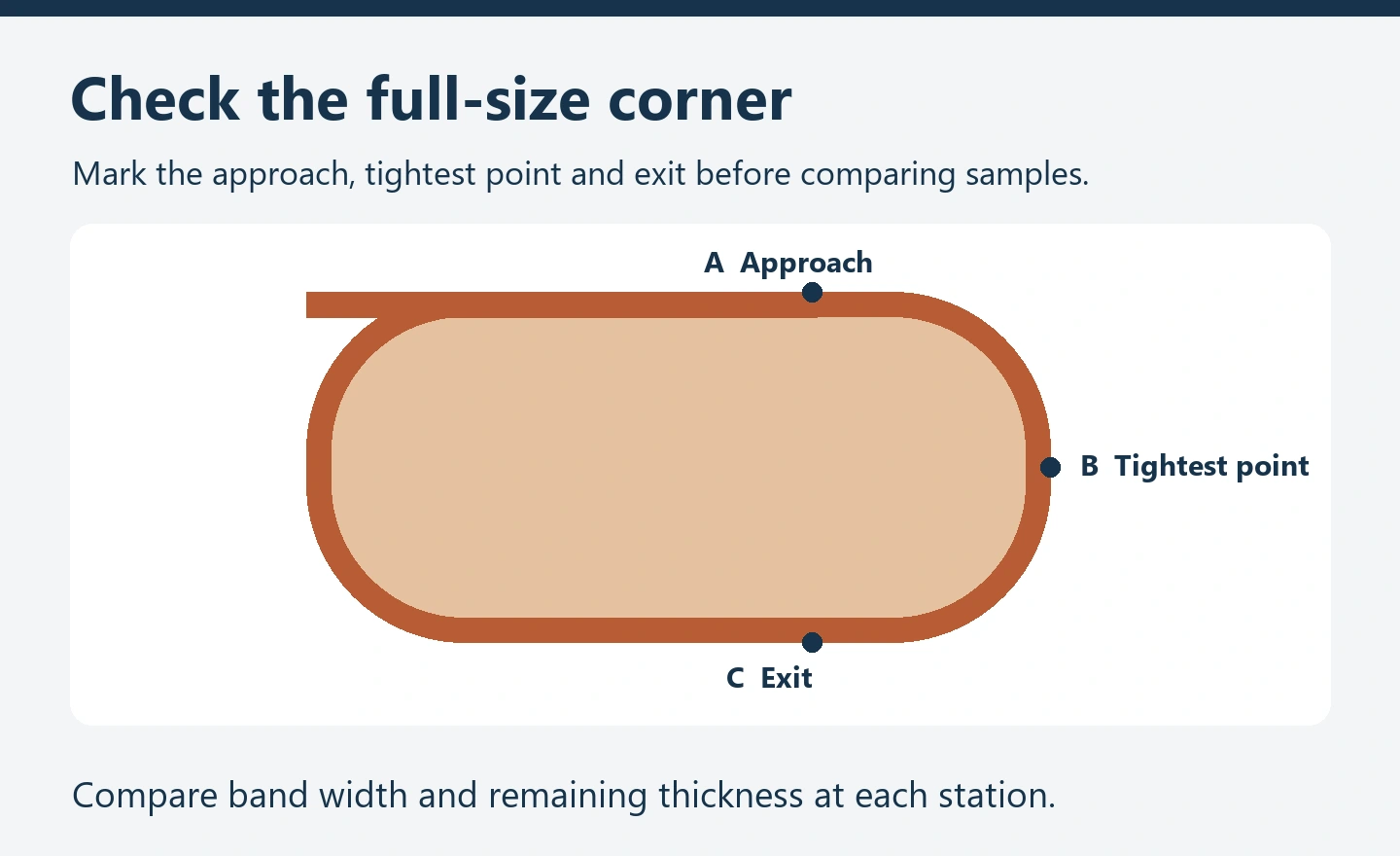
Mark three places on the full-size corner. At each point, read the skive width from the cut edge and measure remaining thickness at the same offset.
Run a straight control and a matching corner
Ask a trained operator to make both trials with the same leather, face orientation and settings. Mark the corner approach, tightest point and exit. When the material is relaxed, check both faces and write down where the thinning band widens, changes direction or breaks through.
Compare the width and thickness where the cut changes
If the band spreads inward only at the turn, compare the original edge with the skive boundary and look at how the part was guided. If the width holds but the leather gets thinner, compare the starting thickness at that point with the uncut control. Preserve the sample for the technician. Stop a run that cuts through and follow the machine manual before adjusting the cutting area.
For a production trial, see the BD-102 bell knife skiving machine. Use the same offcuts to measure changing skive width and thickness.
The Fortuna ES 50 operating manual lists cutting and contact components to check when skiving quality changes. Use the instructions for the machine being serviced.
What to send for a skiving trial
Send the full-size corner, a straight offcut from the same leather and a part showing the damage. Include the target edge profile and, if possible, a photo of how the corner will fold or join.
Use the width and thickness measuring guide and the sample preparation checklist.
Discuss a BD-102 leather edge skiving trial →