
By BoDuan ·
Skiving Leather Upholstery Corners: How to Reduce Seam Bulk
If a leather cover looks smooth on the flat but forms a ridge at an outside corner, mark where the seam allowance crosses the bend. Trial a taper on the allowance that adds bulk. Approve it on the actual corner with the same padding, backing and wrap direction used in production.
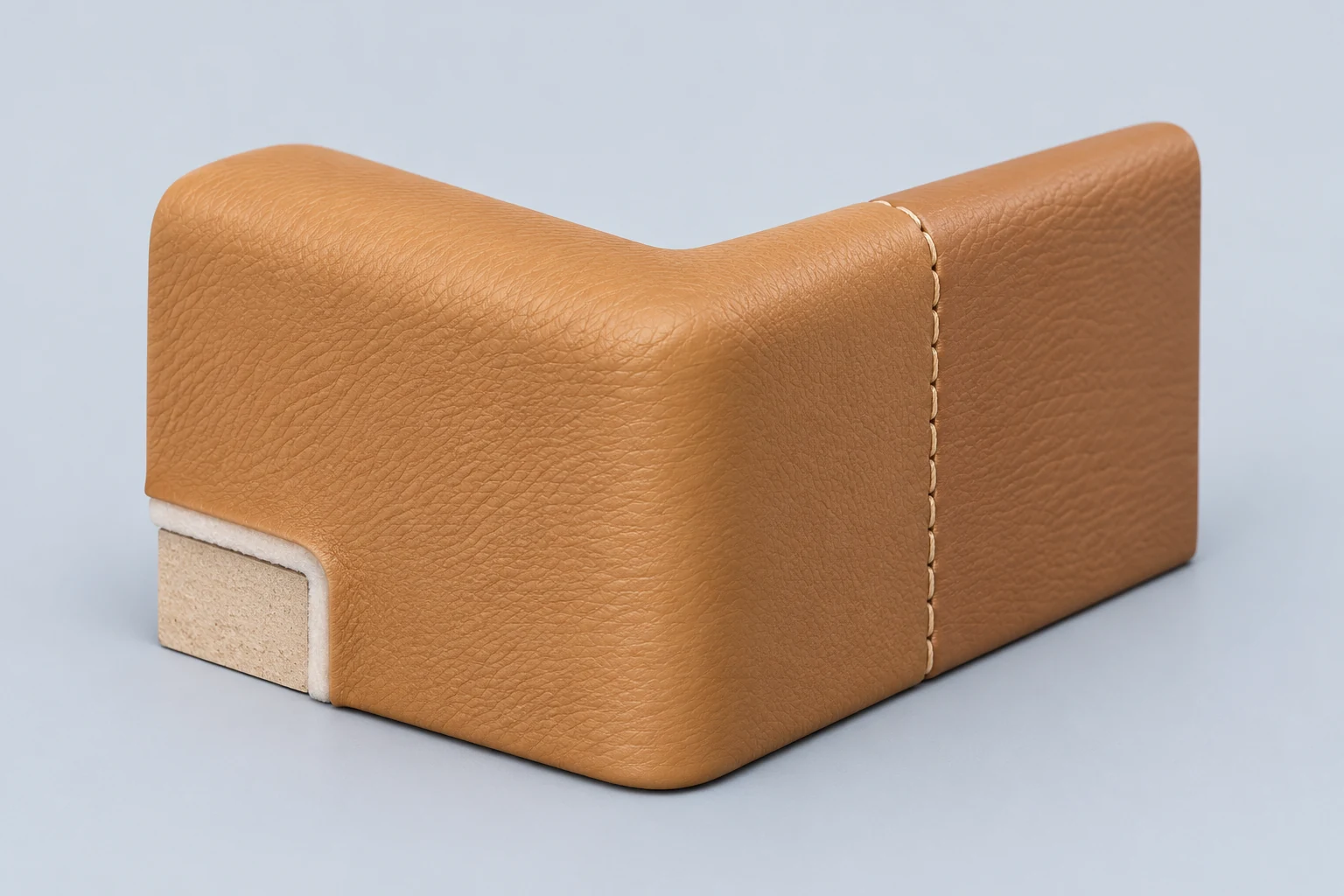
A covered outside corner showing the bend and an adjacent seam. Use the seam position and layer stack on your own sample for the trial.
Where should you skive leather upholstery corners?
Dry-wrap the cover on a representative corner without changing the pattern. Mark where the front face starts to turn down, where the seam crosses or approaches that turn, and where the allowance lands underneath the cover. Transfer the marks onto the flesh side before opening the assembly.
Check one flat section, the apex and the exit onto the next face. A raised line that tracks the allowance points to the seam stack. Loose material across the face or a seam that pulls sideways calls for a pattern or tension check first.
How do you reduce bulk at a leather wrap seam?
Compare the two allowances and mark which one sits directly under the visible ridge. Test a taper on that allowance, keeping the stitch-bearing material at the approved thickness. If both allowances contribute, trial changes one at a time so you can tell which change helps without weakening the joined seam.
Assemble one control and one trial with the same layer order and cover tension. View the corner in raking light and compare the ridge, puckering and stitch distortion at the same three marked positions.
How do you test a skive around a substrate corner?
Use a coupon with the actual corner profile. Retain the padding and any scrim or other backing that changes how the cover travels around the radius. Record the width and remaining leather thickness at the entry, apex and exit so the sample can be repeated.
If the padding compresses or the seam moves during wrapping, recheck the assembled shape before cutting a deeper taper. For a small lined fold with no rigid substrate, use the wallet fold inspection.
What to send for a skiving trial
Send the cover pattern with marks for the outside corner, wrap direction and stitch line, plus a short section of the actual substrate, padding and cover. Include an unaltered reference and show the location of the ridge on an assembled corner.
Use the width and thickness measuring guide and the sample preparation checklist.
See the BD-102 machine and its applications →
Discuss a BD-102 leather edge skiving trial →